Blog
How Accurate Is the Dose in a Gummy Supplement?
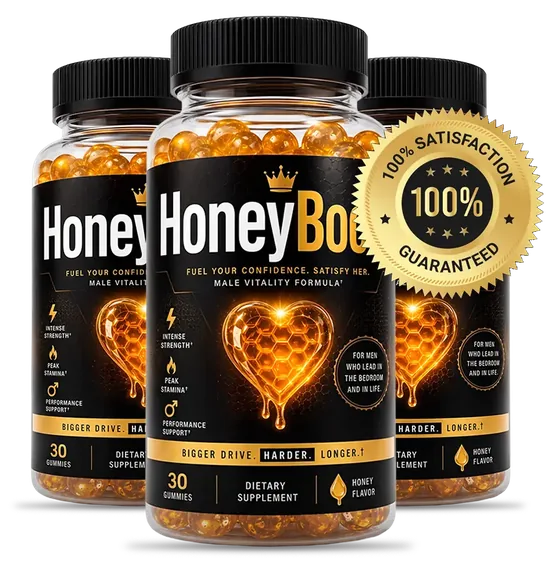
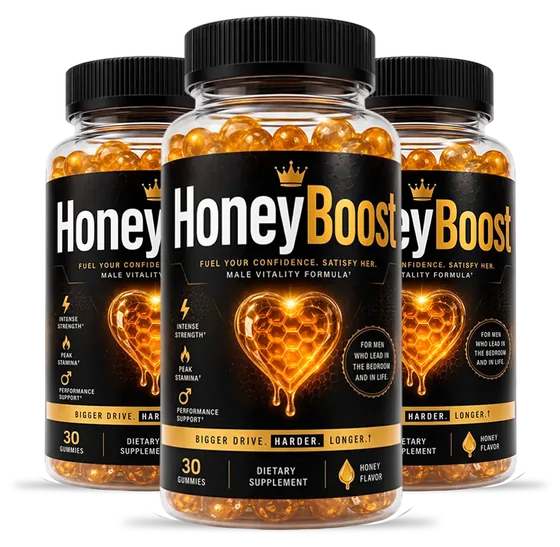
Gummy supplement dosage accuracy is whether the milligrams on the label match what is in the gummy. We found no credible source with numbers on gummies, so we do not say they run high or low. HoneyBoost prints seven amounts, but no lab report is published to check them.
Written by the HoneyBoost label deskUpdated · 4 min read
The question01
Why might a gummy be hard to dose?
A gummy has to hold small amounts of active ingredient inside a much larger sweet base. That is a fair reason to ask how even the amounts are, but we found no study that measured it.
The numbers show the scale. A HoneyBoost gummy weighs 4.2 g. Five of its lines are 10 mg each, tongkat ali is 25 mg and zinc is 2.5 mg. A 10 mg line is about 0.24% of the gummy's weight (our arithmetic).
We make no claim that gummies over- or under-deliver.
The label02
What does a printed amount prove?
A printed amount is the seller's statement of what the gummy holds. It is not a test result.
FDA cannot approve dietary supplements before sale. Makers and distributors have first responsibility for safety, and FDA acts mostly after products reach the market (FDA, Questions and Answers on Dietary Supplements). Federal label rules say how a panel must be built and when amounts must appear (21 CFR 101.36, Supplement Facts Label). They do not publish lab results for you.
| It tells you | It does not tell you |
|---|---|
| The amount the maker states per gummy | That a lab measured it |
| That no proprietary blend hides a line | How much varies between gummies or lots |
| The root equivalent the maker states | How much active compound is in an extract |
| The serving the panel sets: 1 gummy | How much to take (no directions line is printed) |
What testing has shown03
Do tests find labeled amounts that are wrong?
Sometimes, for other products. One Italian study bought four L-dopa supplements online and measured them: the amount matched the label in some, and others were overdosed or underdosed (Aureli 2025, High-percentage L-dopa Supplements Quality).
That sample was four capsule products, not gummies, and none was HoneyBoost. We cite it as a reason to want proof, not as a finding about this gummy. HoneyBoost has an L-DOPA line: mucuna seed extract standardized to 98% L-DOPA, 10 mg, which is 9.8 mg L-DOPA.
A second category risk is hidden drugs. FDA lists many sexual enhancement products with undeclared ingredients, and says an unlisted product is not thereby safe (FDA, Sexual Enhancement and Energy Product Notifications). HoneyBoost is not on that list as we read it, and nothing here says it is tainted.
HoneyBoost: from $49 a bottle30 gummies a bottle · 2, 3 or 6 bottles · shipping shown at checkout · 60-day money-back guarantee
See packsWhat is published04
What proof of dose does HoneyBoost publish?
None that we can find. The front of the bottle says "Lab Tested, No Artificial Additives," but no lab is named and no result is posted.
The seller references lot numbers and a certificate of analysis code. We treat them as seller labels, not lab proof, and no report is published to read. The same label lists "artificial color" under Other Ingredients, so we cannot reconcile the two lines from the bottle.
Which lab tested the gummy, on which lot, and for which lines? Ask for the report. Until one is shown, treat the printed amounts as stated, not verified.
Your next step05
How should you treat a printed dose you cannot verify?
Treat it as the seller's claim, keep expectations modest, and do not use the number to adjust any medicine.
Anyone on prescribed medicine, with heart disease, or managing blood sugar should ask a doctor or pharmacist first. Erection problems deserve a clinician visit, since they can point to other conditions. No source tests HoneyBoost. See testing and quality, supplement facts and how to check a lot number.
FAQ06
HoneyBoost questions people ask
Are gummy vitamin doses less accurate than capsules?
We found no credible source with numbers that compares them, so we make no claim either way. The honest position is that a printed dose is the maker's statement until a named lab report backs it. HoneyBoost publishes no such report.
How can I verify the dose in a gummy supplement?
Ask the seller for a lab report that names the lab, the lot and the lines tested, and match the lot to your bottle. A lot number on its own is not proof. For HoneyBoost, no lab report is published, so the amounts remain stated, not verified.
Does a certificate of analysis prove a gummy's dose?
Only if it names an independent lab, matches your lot and lists the tested lines with results. A bare code or a seller badge is not proof. HoneyBoost's lot and certificate references are seller labels, and no report is published.
Why do herbal extracts print a ratio such as 10:1?
The ratio tells how much raw plant was used per part of extract. A 10:1 maca extract at 10 mg is stated as equal to 100 mg of root. It is a maker's equivalence, not a measure of active compound, and trial doses are extract weights.
Who wrote this07
Written and reviewed by
Pages built from the label, the order page and linked NIH, FDA, FTC, Mayo Clinic and peer-reviewed sources.
Last updated . Read our editorial standards and how we check reviews. This website is the information site for a USA Authorized HoneyBoost Retailer. It is not the manufacturer or the distributor named on the label. We earn money when you buy through our order links.
Keep reading
More about HoneyBoost
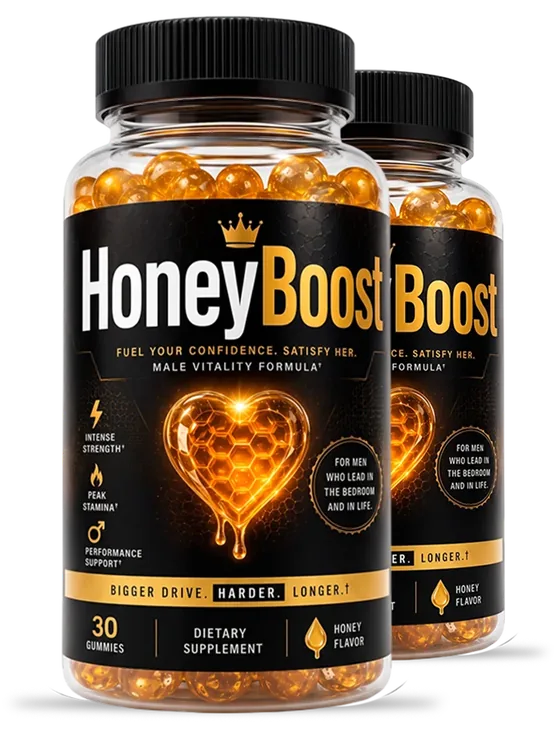
USA Authorized HoneyBoost Retailer
Ready to try HoneyBoost?
Check your medicines with your doctor or pharmacist first, then pick a pack. Six bottles cost the least per bottle; shipping is shown at checkout; every pack carries the 60-day money-back guarantee (confirm the live policy at checkout).
- Checkout on the sales site
- 60-day money-back guarantee
- Shipping shown at checkout